

 Open here

Need help?
Find the most frequently asked questions or contact one of our specialists.
Newsletter
Receive updates on new products, applications, and offers.
Download our product catalogs
BB-sc010x002-N-20
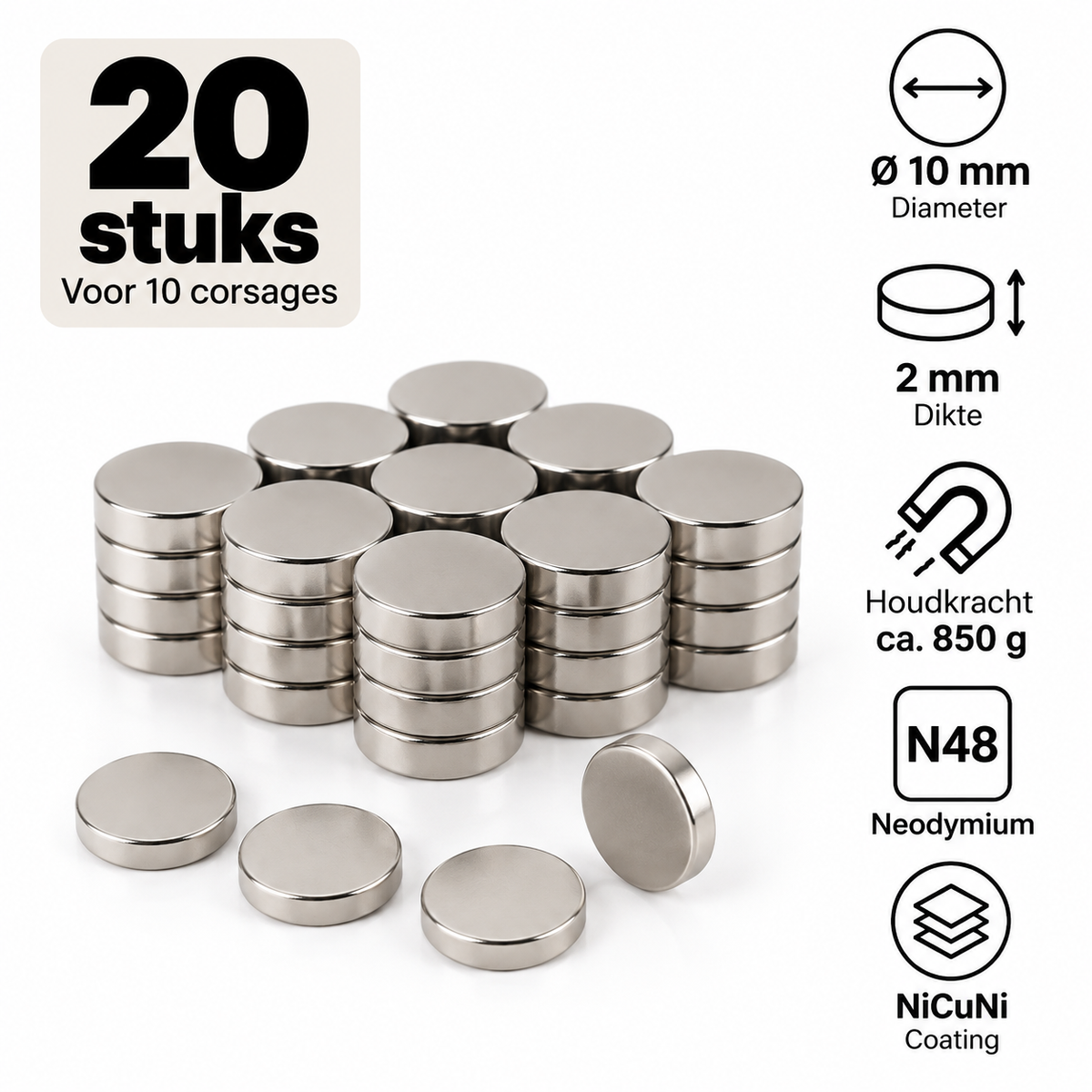
De Corsagemagneten Ø10 x 2 mm zijn kleine, sterke neodymium magneten voor het bevestigen van bloemcorsages zonder spelden door de kleding. Ideaal voor bruidegomscorsages, bruiloften, gala’s en andere gelegenheden waarbij je een corsage netjes en eenvoudig wilt bevestigen.
Deze set bevat 20 neodymium schijfmagneten: voldoende voor 10 corsages. Per corsage gebruik je twee magneten. Eén magneet wordt stevig aan de achterzijde van de corsage verwerkt en de tweede plaats je aan de binnenzijde van de kleding. De magneten trekken door de stof naar elkaar toe en houden de corsage op zijn plaats.
Met een diameter van slechts 10 mm en een dikte van 2 mm zijn deze magneten compact en gemakkelijk achter een bloemcorsage weg te werken. Dankzij het sterke neodymium zijn ze ondanks hun kleine formaat geschikt voor lichte tot normale corsages.
Voor een zwaardere of grotere bruidegomscorsage, of wanneer de corsage door dikkere kleding moet worden bevestigd, adviseren we een grotere en sterkere corsagemagneet.
Met magneten hoef je geen speld door een colbert, overhemd, jurk of andere kleding te steken. Dat voorkomt gaatjes en maakt het eenvoudig om de corsage te plaatsen en weer te verwijderen. Ook hoeft de magneet aan de binnenzijde niet zichtbaar te zijn.
Bevestig één magneet stevig aan de achterzijde van de corsage, bijvoorbeeld met geschikt bloemistenmateriaal of lijm. Plaats de tweede magneet aan de binnenzijde van de kleding. Voor een stabiele bevestiging is het verstandig het magnetische bevestigingspunt zo dicht mogelijk bij het zwaartepunt van de corsage te plaatsen.
Let op: de uiteindelijke houdkracht is afhankelijk van onder andere het gewicht van de corsage, de dikte van de kleding en de afstand tussen de magneten. Test de bevestiging daarom altijd voordat de corsage wordt gedragen.
Veiligheid: sterke neodymium magneten kunnen medische implantaten, zoals pacemakers, beïnvloeden. Houd voldoende afstand en gebruik deze toepassing niet in de directe nabijheid van dergelijke implantaten.
According to the declarations of conformity provided by the manufacturer, this product complies with the current European RoHS Directive and REACH Regulation.

Find the most frequently asked questions or contact one of our specialists.
Receive updates on new products, applications, and offers.
Download our product catalogs