



Need help?
Find the most frequently asked questions or contact one of our specialists.
Newsletter
Receive updates on new products, applications, and offers.
Download our product catalogs
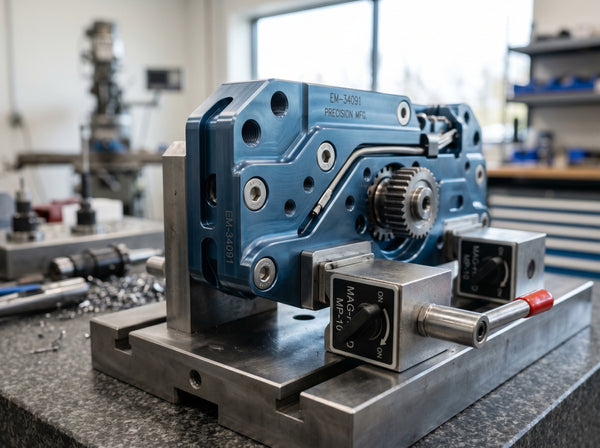
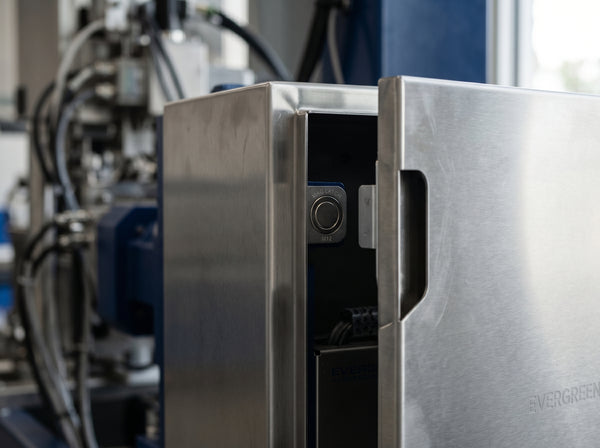
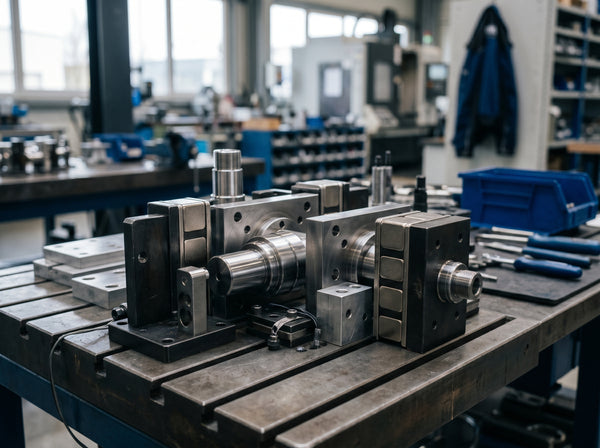
In machines, warehouses and production halls, magnets provide quick and clean solutions: access panels and covers that open and close without tools, components that stay in place during assembly, and signs or cables that you attach without drilling. Below you will find the main applications and which magnet is right for each.
| Application | Suitable magnet | Why |
|---|---|---|
| Access panels and service panels | Magnet with screw hole (pot magnet with countersunk hole) | Can be screwed in, lies flat, high strength due to the steel pot |
| Guards and components on a frame | Pot magnet with threaded insert or threaded stud | Secure, screwed connection with a bracket or profile |
| Labels, signs and documents | Magnetic strip or self-adhesive magnets | Stick on without drilling, easy to move |
| Jigs and components during assembly | Strong block and disc magnets | High holding force, fits in slots and jigs |
| Hanging cables, lighting and tools | Magnet with hook or magnet with eyelet | Hang directly from a steel beam or cabinet |
| Metal particles from liquid or granules | Filter magnets | Capture iron particles in pipes and hoppers |
| High temperatures or moisture | Epoxy magnets or a ferrite pot magnet | Better resistant to moisture; ferrite can withstand up to 200 °C |
Magnetic fastening is quick to install, without screws, glue or tools. Panels and access panels open and close endlessly without wear, and no drill holes or damage are left in the material. This saves time during assembly and maintenance.
For fastening and hanging, usually choose a pot magnet: the steel pot concentrates the force to one side, making it several times stronger than a loose magnet of the same size. Large pot magnets from Ø48 to Ø75 mm hold approx. 37 to 107 kg, measured under ideal conditions. In practice, the holding force is lower; read the difference between holding force, pulling force and working load or calculate it with the Magnet Advisor.
On a vertical wall, a magnet will slide off at approximately 15 to 20% of the stated holding force. So calculate generously, choose a larger size or a pot magnet with a rubber coating for more grip.
Standard neodymium magnets up to 80 °C. Above that, they permanently lose strength. For higher temperatures, ferrite (up to approx. 200 °C) is a better choice. See magnets at high temperatures.
Not on aluminum, and on most types of stainless steel not at all or barely. Magnets adhere to iron and regular steel. See is stainless steel magnetic?
Neodymium is sensitive to rust. In a damp environment, choose an epoxy coated magnet, a rubber coated version or a ferrite pot magnet. See also can magnets be used outdoors?
Yes. For larger quantities, you automatically receive volume discounts, and for projects, request a quote. See the business page or contact us.
Also check the applications for product development and design, the customer projects or the knowledge center.
Find the most frequently asked questions or contact one of our specialists.
Receive updates on new products, applications, and offers.
Download our product catalogs