





Need help?
Find the most frequently asked questions or contact one of our specialists.
Newsletter
Receive updates on new products, applications, and offers.
Download our product catalogs
Magnets make products and interiors sleeker and smarter: invisible fasteners, panels that can be removed without tools, and interchangeable parts. Below you will find how product developers, designers, and interior builders use magnets, and which magnet is right for the job.
| Application | Suitable magnet | Why |
|---|---|---|
| Invisible fastener in wood or plastic | Disc magnets for gluing in | Flat and compact; disappears in a drilled hole |
| Screw in with a counterplate | Ring magnet with countersunk hole and steel ring | Screwable, and the steel ring serves as the counterpiece |
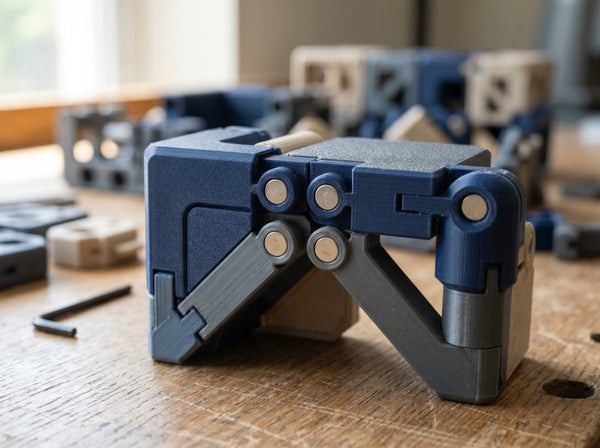
| Build into a 3D print | Rod- or disc magnets | Fit into a round printed hole |
| Bags, sleeves, and textiles | Sewing magnets | Sewn in and invisible, protected against wear |
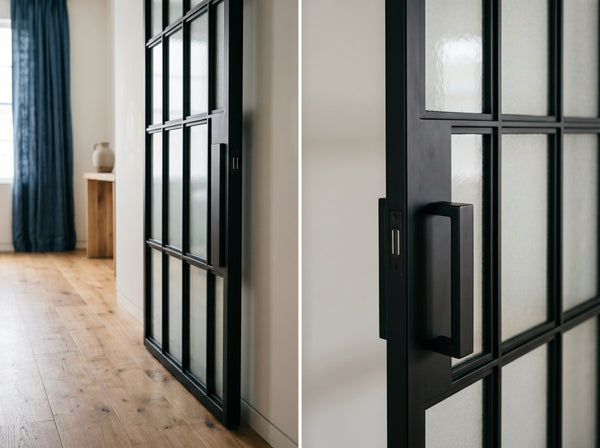
| Steel doors or damp areas | Epoxy magnets | The coating provides better protection against moisture |
| Interchangeable boards and displays | Magnetic strip or pot magnets | Flat over a large surface, or high force at one point |
| High force in a small prototype | Small magnets in N50 or N52 | Highest quality provides the most force per millimeter |
A magnet gives you design freedom: no screws, hinges, or hardware in sight, and parts that you can open, close, or disassemble without tools. This makes products more beautiful and user-friendly, and often easier to maintain or recycle.
Two tips for designing: mark the poles before gluing, so that two magnets attract each other instead of repelling, and consider whether a magnet against steel (a counterplate or steel ring) is sufficient. This is often cheaper and simpler than magnet against magnet. Read more in how do you mount a magnet? and axially or diametrically magnetized.
A two-component epoxy glue provides the strongest adhesion, for example UHU Plus. First degrease the magnet and the surface.
Yes, but every millimeter of distance significantly reduces the holding force. Keep the layer between the magnet and the counterpiece as thin as possible. See can magnets work through wood, glass, and plastic?
Yes, all magnets can be ordered individually. If you go into series production afterwards, you will automatically receive volume discounts or can request a quote.
We are happy to help with a non-standard size, magnetization, or coating. Read have custom magnets made or contact us.
That depends on the weight, the distance, and the direction in which it is pulled. The Magnet Advisor helps you choose; also read how many magnets do I need?
Also view the applications for industry and hobby and DIY, the customer projects or the business opportunities.
Find the most frequently asked questions or contact one of our specialists.
Receive updates on new products, applications, and offers.
Download our product catalogs